
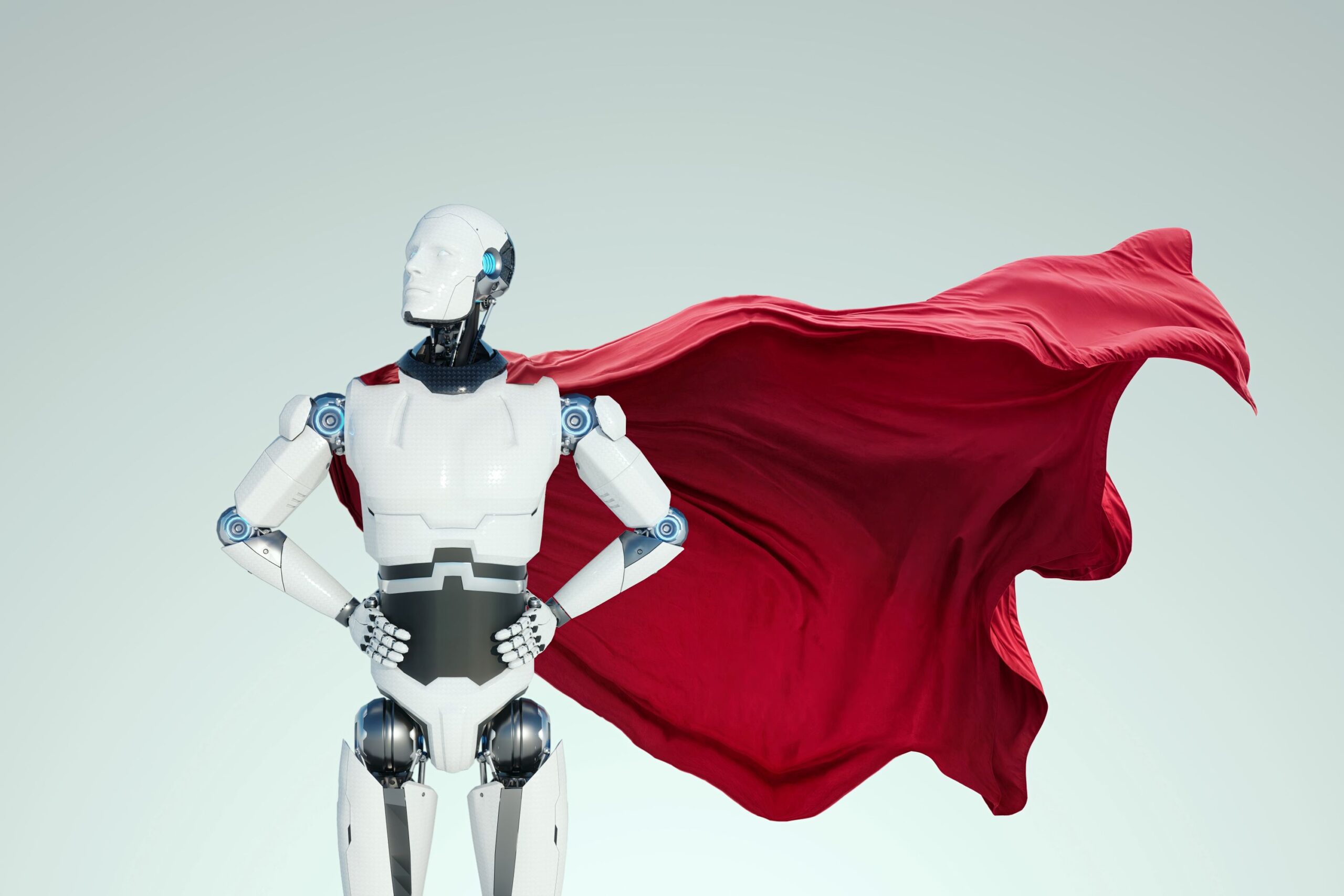
There is a new job position in demand concerning technology’s future with the advancement of Artificial Intelligence (AI). This new position will take AI and develop superintelligence far exceeding computational algorithms and the human skill sets of problem-solving, creativity, and emotional understanding.
Artificial Superintelligence (ASI) is the sort of thing you see in movies such as Terminator with Skynet, C.H.A.P.P.I.E., Ex-Machina, and RoboCop, to name a few. It’s where AI has been developed to mimic human intelligence, evolving from simulated neural networks, such as the brain, and combined with how humans think.
Mark Zuckerberg — founder of META, as well as Facebook, Instagram, Reels, and Threads — is developing a superintelligence development team focused on various components that address concerns regarding ASI.
The new ASI project will be led by leading industry technology executives, including Scale AI’s CEO Alexandr Wang and the former GitHub CEO Nat Friedman. They and other executives will lead different development teams dedicated to research and with a concentration on various foundational AI models.
Zuckerberg has been in a hiring frenzy trying to compete with other high-profile tech companies such as Google and OpenAI. The teams will use open-source Llama software, which is a family of large language models that enable ethical AI development and decentralized experimentation.
As a side note, Zuckerberg, to show how serious he is in his recruiting efforts, is offering positions to some of OpenAI’s engineers with as much as $100 million sign-on bonuses. However, in fierce competition, OpenAI has been countering Zuckerberg’s META offerings. All AI team leaders agree that “The market is setting a rate for a level of talent, which is incredible!” It is unprecedented.
Zuckerberg posted an internal hiring memo, which was just released this past July.
“As the pace of AI progress accelerates, developing superintelligence is coming into sight. I believe this will be the beginning of a new era for humanity, and I am fully committed to doing what it takes for Meta to lead the way. Today I want to share some details about how we are organizing our AI efforts to build towards our vision: personal superintelligence for everyone.
We are going to call our overall organization Meta Superintelligence Labs (MSL). This includes all our foundations, products, and FAIR teams, as well as a new lab focused on developing the next generation of our models.
Alexandr Wang has joined Meta to serve as our Chief AI Officer and lead MSL. Alex and I have worked together for several years, and I consider him to be the most impressive founder of his generation. He has a clear sense of the historic importance of superintelligence, and as co-founder and CEO, he built ScaleAI into a fast-growing company involved in the development of all leading models across the industry.”
Zuckerberg went on to state that MSL has several strong new team members joining the team.
- Trapit Bansal – pioneered RL on chain of thought and co-creator of O-series models at OpenAI.
- Shuchao Bi – co-creator of GPT-4o voice mode and o4-mini. Previously led multimodal post-training at OpenAI.
- Huiwen Chang – co-creator of GPT-4o’s image generation, and previously invented MaskGIT and Muse text-to-image architectures at Google Research
- Ji Lin – helped build o3/o4-mini, GPT-4o, GPT-4.1, GPT-4.5, 4o-imagegen, and Operator reasoning stack.
- Joel Pobar – inference at Anthropic. Previously at Meta for 11 years on HHVM, Hack, Flow, Redex, performance tooling, and machine learning.
- Jack Rae – pre-training tech lead for Gemini and reasoning for Gemini 2.5. Led Gopher and Chinchilla early LLM efforts at DeepMind.
- Hongyu Ren – co-creator of GPT-4o, 4o-mini, o1-mini, o3-mini, o3 and o4-mini. Previously leading a group for post-training at OpenAI.
- Johan Schalkwyk – former Google Fellow, early contributor to Sesame, and technical lead for Maya.
- Pei Sun – post-training, coding, and reasoning for Gemini at Google DeepMind. Previously created the last two generations of Waymo’s perception models.
- Jiahui Yu – co-creator of o3, o4-mini, GPT-4.1 and GPT-4o. Previously led the perception team at OpenAI and co-led multimodal at Gemini.
- Shengjia Zhao – co-creator of ChatGPT, GPT-4, all mini models, 4.1, and o3. Previously led synthetic data at OpenAI.

Zuckerberg said, “I am excited about the progress we have planned for Llama 4.1 and 4.2. These models power Meta AI, which is used by more than 1 billion monthly active users across our apps and an increasing number of agents across Meta that help improve our products and technology. We are committed to continuing to build out these models.
In parallel, we are going to start research on our next generation of models to get to the frontier in the next year or so. I have spent the past few months meeting top folks across Meta, other AI labs, and promising startups to put together the founding group for this small talent-dense effort. We are still forming this group, and we will ask several people across the AI org to join this lab as well.”
Zuckerberg believes that Meta is uniquely positioned to deliver superintelligence to the world. Their strong business model supports building out significantly more computers than smaller labs, and that with their deep experience of building and growing products that will reach billions of people.
Additionally, Meta is pioneering and leading the development of the AI glasses and wearables category, which is growing very quickly. The company’s structure allows it to move with significantly greater conviction and boldness. Zuckerberg is optimistic that the new influx of talent and parallel approaches to model development will set the company up to deliver on the promise of personal superintelligence for everyone.

“We have even more great people at all levels joining this effort in the coming weeks, so stay tuned. I am excited to dive in and get to work.”
The MSL will be spending billions of dollars to build several massive AI-focused data centers to support the MSL team’s software development efforts. The first META super gigawatt data center, named Prometheus, is expected to be fully on-line by 2026.
The AI data center is so gigantic that it can cover a significant part of the footprint of downtown Manhattan. The center will be the first online gigawatt supercluster for supporting the AI Teams’ superintelligence push.
AI, and its successor, ASI, are fast developing into fixtures of human evolution, an inevitability that many are hailing as the next giant step for mankind. Time will tell.
