

Humans create 402.74 million terabytes of information daily, of which the average American consumes up to 74 GB — roughly 200,000 words or 200 hours of TikTok — per day. Via the five senses, they can handle about 11 million bits per second, but their conscious mind can only comprehend approximately 50 bits per second.
The 24/7 barrage of news, all-consuming social media, and a tsunami of “entertainment” is leading to impaired focus, compromised decision-making or paralysis, sleep deprivation, and decreased productivity and efficiency. It’s all wearing people down, overloading them to the point of exhaustion, depletion, despair, and depression — burnout.
First appearing in the early 1970s, the term “burnout” was used to describe the emotional, mental, and physical exhaustion experienced by people in the healthcare professions. It’s now applied to every segment of society and can affect any individual, no matter what their education, profession, title, celebrity, wealth, or status. The upshot is that burnout is the byproduct of our times.
It’s not news that Americans are living in a fast-paced, frenetic, constantly changing world. Trying to keep up with it all is extremely taxing, and the overload of information and the need to stay on top of the mountain of data is having a seriously deleterious effect on the US population.
- 80% of US workers experience information overload
- 74% of employees have experienced burnout at some point
- HR professionals estimate that 30% of employees are experiencing “silent burnout,” a slow, undetected state of exhaustion
- Burnout costs employers from $4K to over $20K per employee per year
- Human attention spans have decreased from 12 seconds in 2000 to 8 seconds in 2023, comparable to that of goldfish
- Economists estimate that information overload costs the US $900 billion per year in reduced productivity and innovation
Needless to say, burnout can have serious effects on one’s health, from an increased risk of heart disease to a weakened immune system, digestive issues, depression, anxiety, and impaired cognitive functioning.
So that’s the workplace situation concerning burnout that we’ve become more familiar with over the last couple of decades. But burnout also occurs in another way, which is with one’s mental/emotional set. This occurs when specific topics are forever in the news and on social media, the constant focus of conversations, are repeatedly advertised, and made wedge points in campaigns and causes of all kinds.
Some issues have been with us for decades — even centuries — so much so that people are truly tired of hearing and reading about them. It doesn’t matter how important an issue may be or how significantly it impacts lives — it’s become brain-numbing.
There are two ways of characterizing this phenomenon:
- Cognitive weariness — overload of mental stimulation or information; leads to emotional exhaustion, reduced mental resilience, and downward spiraling apathy.
- Social fatigue — develops from spending large amounts of time with people wherein one feels pressed to engage in topics and issues ad nauseam; leads to feeling drained, anxious, and irritated.
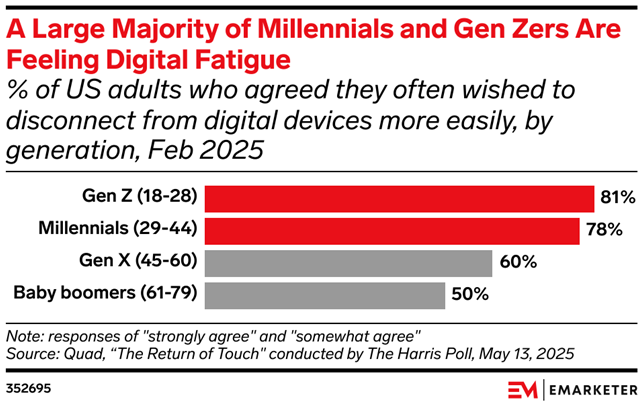
The list of issues society is tired of facing is seemingly endless, but there are a few that top the list: racism, climate change and the environment, LGBTQ+ and gender, religion, cancer, misogyny and male toxicity, pornography, immigration, wealth inequality, healthcare, boomers and aging, housing, guns, crime, corporate malfeasance, corruption, and politics.
People are so-o-o done with hearing about these, talking about them, reading about them, seeing expressions of them in movies, TV shows, YouTube videos, on TikTok and Instagram, and in books. Granted, they are all important issues requiring attention, input, and involvement — yet the unending focus on them has worn people down to the point that they’re experiencing a seriously reduced quality of life.
Part of the problem is that there are a plethora of individuals, influencers, and agencies whose sole purpose is to preach to and inflame viewers and followers with non-stop diatribes, and disparaging and inciting postings, sound bites, and “reports.” They’re relying on the fact that those listening and following are so fatigued by the amount of information output that they’re barely using their critical thinking skills, if at all.
Thus, a widely employed methodology is called mis- and disinformation, otherwise known as “fake news.” DemandSage, a company that provides data-driven solutions for business growth, reports that:
- Approximately 62% of online information could be false
- On average, 40% of content shared on social media platforms is false
- 44% of news consumers don’t trust news from traditional sources
- 93% of social media videos are now generated using AI for manipulative purposes
- Fake news costs the global economy $78 billion annually
Combined with the deluge of constantly “streaming” news, the influx of partial, manipulated, and completely fabricated information is seriously daunting. With the advent of Artificial Intelligence (AI), it’s becoming increasingly difficult to discern true vs. fictitious narratives, which has put many people on hypervigilant edge.
On the flip side, for many people, it’s numbed them to a degree where they no longer bother to check the veracity of the information they’re taking in, and they no longer care. The expectation is that someone else will deal with the issues and make things right.
This unending scenario creates an enervating, anesthetizing, and brain-deadening inertia on individuals, communities, and the populace at large.
The antidote to overwhelm, apathy, and burnout is: choice. Every person alive has multiple opportunities each day to make choices about what they want to focus on, who they want to listen to, what to watch and read, who they hang with, and what they want to put their energies toward. It’s as simple as that, yet can take all of a person’s willpower to make different choices — especially if the people around them are pressuring them in any way.

Life is all about choices, and those choices create the realities people live and operate within. Burnout is solvable, and it begins with each person making the number one choice of taking care of themselves first. That can involve anything from spending less time with certain people to changing the dynamics of relationships. It also means significantly reducing the amount of time spent scrolling the news and social media. This is what’s called “setting boundaries,” which can apply to anything that garners so much attention and wears one down.
Another step to take is to assess what triggers the emotional response of shutting down mentally and emotionally. The choice is to then avoid those triggers and choose something more positive, affirming, and supportive.
One could also work with a trained therapist to determine the motivation and meaning behind those things that cause overwhelm and burnout. Then, another choice needs to be made as to what truly needs one’s attention and the depth of its importance.
Though life will always present challenges — and some challenges have been with us a long time — it’s important to work with others when it comes to the big issues. That way, a person won’t feel they stand alone but instead have the support of like-minded people. Stay attuned to those things that truly matter and know that together, we stand stronger. “In every community, there is work to be done. In every nation, there are wounds to heal. In every heart, there is the power to do it.” (Marianne Williamson)
