

A headline in the online media platform, Daily Galaxy, states, “A Breed in Decay: Why US Millennials and Gen Z are Dying at an Alarming Rate – Faster than Any Other Generation in Recent History.”
That’s quite startling. And, of course, the question is: Why?
The article points to a report published in the Journal of the American Medical Association (JAMA) that has found this public health issue predates the COVID pandemic and seems to be accelerating. When compared to other wealthy countries like Canada, Germany, and Japan, the US trend is significantly higher. Dr. Jacob Bor, one of the lead authors of the study, says that we have “an unfolding generational catastrophe … a systemic pattern of premature death unique to the American experience.”
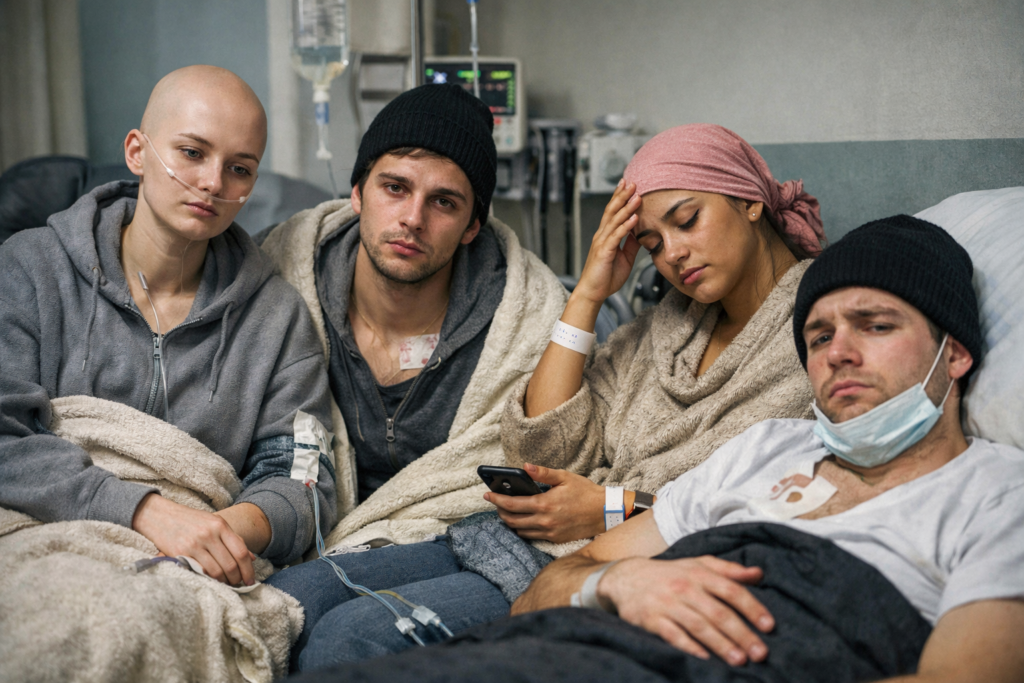
Researchers have discovered that by 2010, the deaths of young adults began rising, primarily from synthetic opioids, car crashes, alcohol-related diseases, and diabetes — especially for those without college degrees. Following the pandemic, the mortality rate among 25 – 44-year-olds remained 70 percent higher than as far back as the early 2000s.
Another study, published in Proceedings of the National Academy of Sciences, also found that the mortality rate for people born between 1970 and 1985 — late Gen Xers and elder millennials — is increasing. The study states that this trend will most likely get worse as this age group moves into their fifties and sixties. The two most prevalent causes of death are heart disease and cancer, specifically colon cancer.
None of this seems to make sense, considering the wealth of information available about all aspects of health and the multitude of products and medical tech focused on keeping us healthy, thriving, and extending our lives. The Daily Galaxy article has an answer for that: systemic failure, not individual behavior.
What that means is that from a structural perspective, life in America has become much more challenging for young adults because all of the systems we have in place — health, social, and economic — are not meeting or safeguarding the needs of this age group.
Young adults are facing a workforce where once stable jobs are now looking at extinction because of advances in Artificial Intelligence (AI). Other social factors include:
- gun violence,
- addictions,
- healthcare cuts and costs,
- rising education costs,
- housing costs,
- shrinking social safety nets,
- governmental policy inaction, and
- The process of moving from industrialization to tech
… are creating an untenable survival scenario and producing unrelenting stress that many young adults are unable to effectively deal with. The result is an uprise in negative lifestyle choices that bring about compromised physical and mental health. What researchers are finding now is that young adults are 2.6 times more likely to die than those in other developed countries.
Right now, eight of the ten leading causes of death in the US are heart disease, cancer, stroke, chronic lower respiratory disease, Alzheimer’s disease, diabetes, kidney disease, and chronic liver disease or cirrhosis. The projected health care cost for cancer is $246 billion by 2030; for cardiovascular diseases, $2 trillion by 2050. We are definitely headed in the wrong direction. How we’ve done that is important to understand.
The website Healthandme wrote in an article dated September 4, 2025, that the “Opioid epidemic is one of the leading causes of millennials’ deaths … opioid overdose fatalities increased more than 500 percent between 1999 and 2017, while synthetic opioid death rates have risen by 6,000 percent.”
The article states that the pandemic amplified this situation with young adults experiencing loss of employment, which brought on already existing financial uncertainty, plus social isolation led to increased substance abuse and depression. Economically, Gen X and millennials have been experiencing increasing difficulty in securing financial stability, homeownership, and career advancement.
This combination of factors — as well as the current socio-political climate, additional economic stresses, rising costs, and war — has created a significant emotional downward spiral that’s severely impacting this age group.
Obviously, all of the above negatively impact a person’s mental and emotional well-being. In an article for Boston University’s “The Brink,” Andrew Stokes, an SPH associate professor of global health, stated,
“This generation of early adults grew up in a time of economic uncertainty and downward mobility compared to their parents. …they’ve had to contend with the ‘expansion of industries that affect public health — processed foods and beverages, prescription drugs and OxyContin, alcohol, combined with this creeping effect of the obesity epidemic.’”
He also pointed out that the rise of cardiometabolic disorders among younger people is a particularly concerning red flag. “Usually, it takes a lifetime to manifest cardiovascular disease and related mortality. …These are the ages, 25 – 44, in which behaviors become entrenched, and life course risks start to develop.” He backed up what other researchers have also highlighted: that this is “an indication of what may happen to population health as a whole in the decades ahead as this generation ages.”
All of this may sound like we’re on the slippery slope to a bleak dystopian future, but there is a way to turn this trend around. Essentially, it comes down to three factors:
- Individual choices
- Community cohesion
- Policy advancements
Let’s begin with the last factor: policy advancements. This is going to require a lot of time, energy, and stamina. We’re all aware of the negative impact current policies are having on healthcare, the cost of food and goods, travel, insurance, and more. The only way to deal with this is through civic involvement and ensuring our representatives from city to state to nationally are listening to us and responding appropriately to our needs, not the needs of corporations, the wealthy, and special interests. A country is only able to thrive and sustain itself if all members of that society are honored, supported, and thriving.
The second factor, community cohesion, centers around community involvement and connection so that we are more attuned to our immediate neighbors and area as a whole. It means knowing what the issues are, making our voices heard, and ensuring as many people as possible vote. That goes for not only locally, but state-wide and nationally.
The first factor, individual choices, is really about personal physical, mental, and emotional healthcare.
- Physically – this means taking a hard look at our diets. We have so many processed, chemically adulterated, salt and sugar-laced, and bad oil-infused foods that do nothing positive for our health. Secondly, we need to get off our behinds and do more regular types of exercise. That will mean spending much less time on our phones and in front of our televisions and computers.
- Mentally, what we choose to focus on will directly impact our mood and sanity — and that’s what we’ll radiate outwardly to the world around us. If we’re doom scrolling, trolling others on social media with anger and negativity, watching sensationalized podcasts, listening to negative music lyrics, and hanging out with people with a similar focus, we’re not helping ourselves. The only thing those factors do is exacerbate negativity, not elevate, inspire, and uplift.
- Emotionally, the lifestyle choices we make are a direct reflection of our interior sense of self and our state of well-being. We need to ask questions like: What truly makes me happy and feeds my heart and soul? Am I living for myself, for others, or for an ideal or ideology? Am I connecting with others through loving, serving, and giving, or am I just watching out for myself?
All three factors require ongoing diligence and the desire to help turn around this alarming trend affecting so many millennials and Gen Xers. It’s time to get real and get moving — in all aspects of our lives. Though the challenge is complex and there are many obstacles before us, it all comes down to quality of life — and we all deserve the highest, most enriching and fulfilling life imaginable!
