
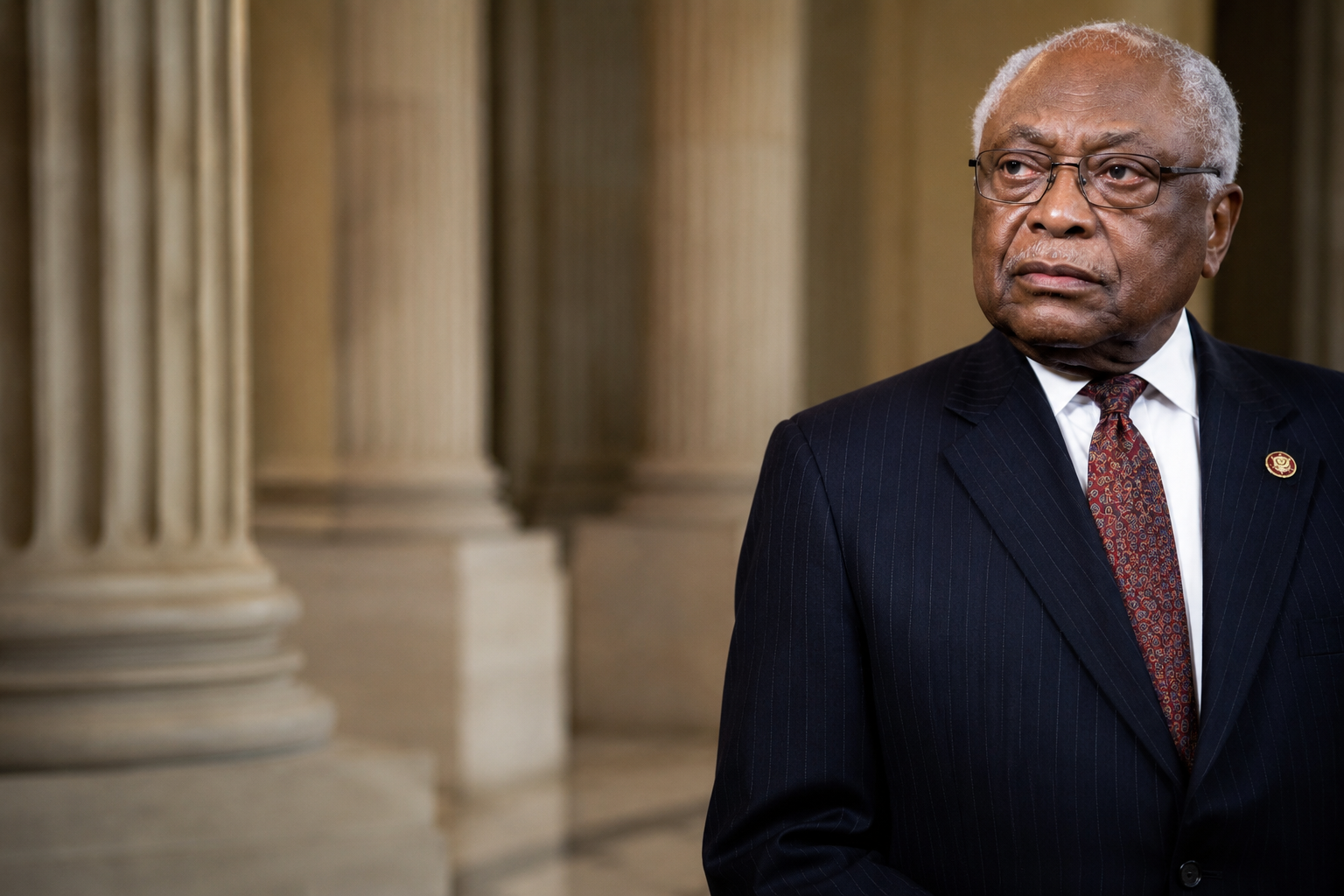
On March 12, 2026, longtime South Carolina Congressman Jim Clyburn announced that he would seek an 18th term in the US House of Representatives at the age of 85. The announcement drew significant criticism, particularly from members of Generation Z, many of whom argue that the Democratic Party needs a new generation of leadership. For these young voters, Clyburn’s decision highlighted a broader frustration with older elected officials who continue to hold office, limiting opportunities for younger leaders to advance and shape the party’s future.
Many Americans have expressed frustration with what critics describe as a “gerontocracy,” a political system in which elected officials remain in positions of power well into their eighties and beyond. For these voters, the continued dominance of older politicians has fueled concerns about representation, responsiveness, and opportunities for younger generations to assume leadership roles.
According to Quorum, the average age of members of Congress is approximately 59 years old, with senators averaging 64 years of age and members of the House of Representatives averaging 57. As a result, Baby Boomers (born between 1946 and 1964) make up the largest generational bloc in the Senate, while Generation X (born between 1965 and 1980) constitutes the largest bloc in the House. Additionally, more than 100 members of Congress are over the age of 70, underscoring the prominent role older generations continue to play in shaping national politics.
Rather than seeing incumbents remain in office for decades without a clear succession plan, many of these voters believe experienced politicians should help cultivate and mentor potential successors who can continue their work while offering a leadership style that is more responsive to the concerns of younger generations.
A growing movement among young activists has called for higher generational turnover in American politics. One of the most visible leaders of this effort is David Hogg, the former vice chair of the Democratic National Committee, survivor of the Parkland school shooting, and gun reform advocate. Through his organization, Leaders We Deserve, Hogg has supported younger candidates challenging older incumbent Democrats who many members of Gen Z view as out of touch with younger voters and ineffective in addressing contemporary issues.
While Hogg did not back a primary challenger to Jim Clyburn during the 2026 election cycle, the debate surrounding Clyburn’s candidacy reflects the broader conversation Hogg has helped bring to the forefront regarding generational change in political leadership.
Clyburn has stated that leaving Congress would be like “giving up his life,” a comment that sparked criticism from some young activists. In response to similar arguments from long-serving politicians, Hogg has maintained that congressional seats belong to the American people, not to the individuals who occupy them. This sentiment has become a common talking point among Gen Z activists advocating for younger leadership and increased opportunities for the next generation of elected officials.
Gen Z’s calls for younger candidates to challenge older incumbent politicians have become a significant factor in the 2026 midterm elections, particularly within the Democratic Party. What began as a growing demand for generational change has evolved into a reality, with several races across the country featuring younger challengers running against long-serving incumbents.
Many young voters argue that Democratic career politicians have not been aggressive enough in opposing the Trump administration and believe that a new generation of politicians is needed to address the concerns and priorities of younger Americans. Polling also suggests that the desire for generational change extends beyond Gen Z. According to an NPR/PBS News/Marist poll, nearly eight in ten Americans support imposing both term limits and mandatory age limits for members of Congress.
These findings indicate broad public concern about the age and tenure of elected officials and reflect a growing appetite for new leadership in Washington. As a result, a number of high-profile contests have emerged that exemplify this broader debate over age, leadership, and the future direction of the Democratic Party. These contests demonstrate that an increasing number of young Americans are rejecting the traditional “wait your turn” approach to political advancement and are instead choosing to challenge incumbent officeholders directly in primary elections.
In Massachusetts, the Democratic primary for US Senate features incumbent Senator Ed Markey and Representative Seth Moulton. Moulton has directly raised concerns about Markey’s age (79) and has argued that the party should begin to “pass the torch” to a younger generation of leaders.
At the state party convention, Markey secured the endorsement of the Massachusetts Democratic Party with roughly 73% of delegate support, while Moulton received about 27%, enough to qualify him for the September primary ballot. However, polling from Emerson College shows a closer contest, with Markey leading Moulton 37% to 32%, suggesting a competitive race that could shift in the months ahead. The two candidates are scheduled to debate in August ahead of the September primary.
In Arizona’s 4th Congressional District, Representative Greg Stanton is facing a primary challenge from progressive activist Kai Newkirk, who argues that Stanton is closely aligned with corporate interests and represents an entrenched political establishment that has not taken a sufficiently aggressive stance against President Trump. Newkirk has received backing from several progressive organizations, including Our Revolution, a political action group founded by Senator Bernie Sanders. Political observers generally view Stanton as the favorite to win the primary, citing his incumbency advantage and prior electoral success. However, the race remains ongoing, with the primary election scheduled for July 21.
In Washington, DC, Councilmember Robert White announced his candidacy to challenge 88-year-old Delegate Eleanor Holmes Norton. White’s entry into the race proved significant, as Norton subsequently announced her retirement amid growing scrutiny over her age and continued tenure in office. In this case, generational pressure appeared to have an impact even before Election Day.
Following Norton’s retirement, the race shifted from an incumbent-versus-challenger contest to an open-seat competition. Several additional candidates have since entered the field, making the primary more competitive, though White remains among the early frontrunners as of June.
In Texas’s 9th Congressional District, longtime Representative Al Green, 78, was forced into a runoff election by 37-year-old challenger Christian Menefee. Menefee ultimately defeated Green, a result that has been described as a generational upset in the current midterm cycle. His campaign emphasized the need for change in the district, and he also outpaced Green in fundraising.
The outcome has been viewed as an example of a younger Democrat prevailing over a long-serving member of Congress, reflecting broader tensions over generational change within the party.
The growing calls for career politicians to retire and make way for younger leaders are largely driven by arguments from younger voters who believe that long-serving politicians are out of touch with contemporary issues affecting their generation, including housing affordability, student debt, and climate change.
In contrast, older elected officials often emphasize their extensive experience and institutional knowledge, arguing that decades of public service provide valuable insight into how government operates and how to effectively navigate complex policy challenges.
Career politicians also benefit from established relationships and extensive legislative experience, which can help them build coalitions and advance policy initiatives more effectively. Their historical perspective on major legislative debates and political developments can provide valuable context when addressing contemporary challenges.
Additionally, career politicians can serve as mentors to younger members of Congress, passing on institutional knowledge and practical insights gained through years of public service. For these reasons, many argue that experienced elected officials continue to play an important role in government and that the most effective legislatures are those in which seasoned lawmakers and younger politicians work alongside one another.
As younger candidates increasingly challenge long-serving incumbents, the 2026 midterm elections are providing an early test of how generational change could reshape American politics in the years ahead.
